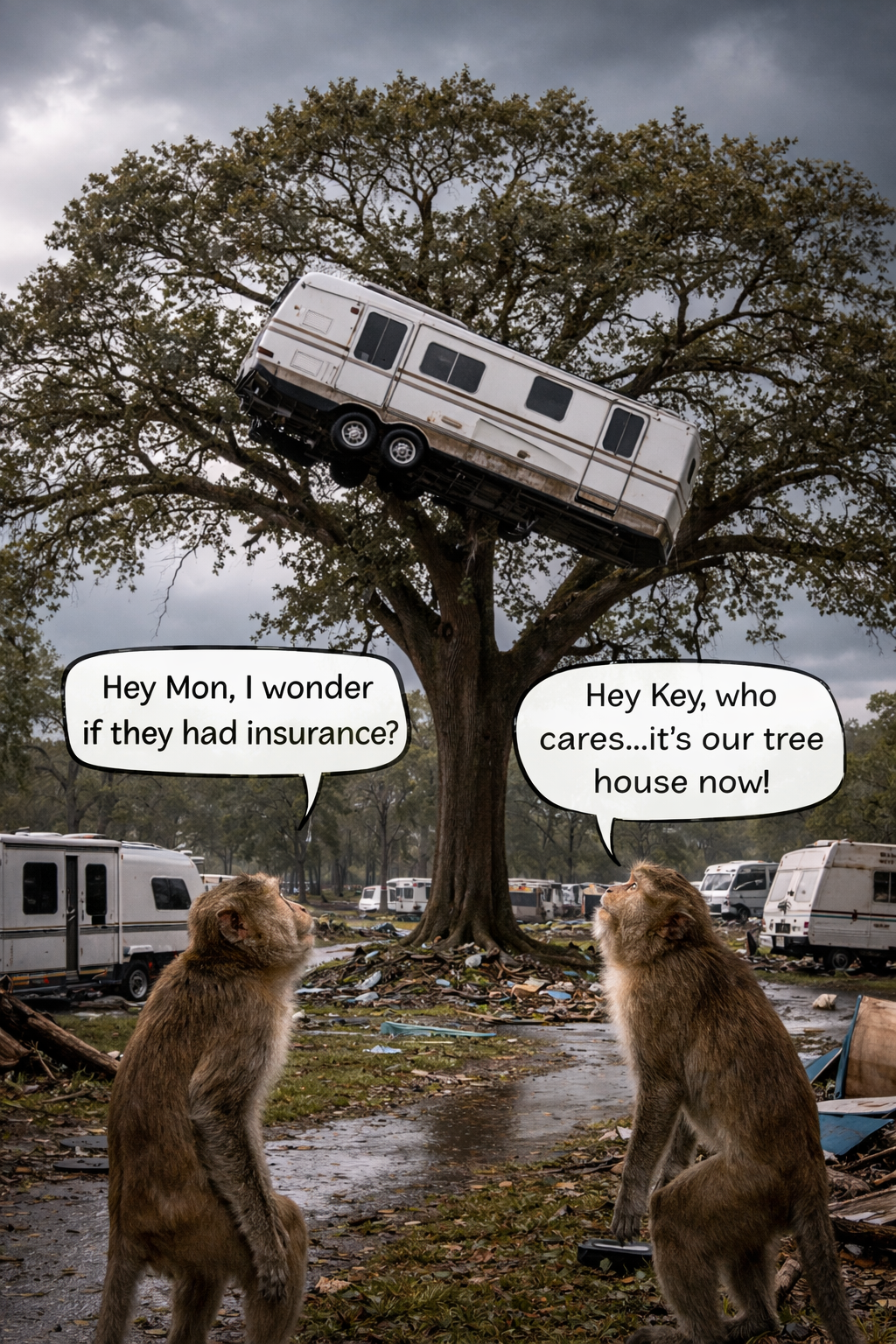
Living full-time in an RV offers freedom, flexibility, and a unique lifestyle that many people love. But one question comes up often among full-time RVers:
“If my RV travel trailer is parked permanently and not being towed anymore, do I still need RV insurance?” The short answer is yes—absolutely.
Even when parked at an RV park, your RV is still exposed to many risks that can cause expensive damage or even a total loss. In fact, when your RV becomes your primary residence, having the right insurance coverage becomes even more important.
In this article, we’ll explain why full-time RV insurance matters and the types of coverage every full-time RVer should consider.
Many people assume that once their RV is no longer traveling on the road, the risk decreases. Unfortunately, that’s not the case.
RVs parked at campgrounds and RV parks are still vulnerable to several common losses, including:
Fire
Tornadoes and severe storms
Hail damage
High winds
Falling trees
Vandalism
Theft of personal belongings
Theft of the entire RV
Severe weather alone causes millions of dollars in RV damage every year. If your RV is your home, a major loss could leave you without both transportation and shelter.
That’s why many insurance companies offer specialized full-time RV insurance policies designed for people who live in their RV year-round.
One of the most important parts of a full-time RV insurance policy is Other-Than-Collision coverage, sometimes called comprehensive coverage.
This protects your RV from many risks that can occur while it’s parked. Examples include:
A porch or attached structure collapsing due to heavy snow or ice
Fire damage caused by electrical issues or nearby wildfires
A large tree falling during a windstorm
Hail or storm damage during severe weather
For full-time RVers, these are real-world events that happen every year.
Without proper coverage, the cost to repair or replace your RV could be financially devastating.
If you live in your RV full time, your RV likely contains far more belongings than a recreational camper used only a few weekends each year.
Your RV may contain:
Clothing and personal items
Electronics and computers
Furniture
Kitchen equipment
Tools
Outdoor gear
These items can add up to thousands or even tens of thousands of dollars in value.
A good full-time RV insurance policy should include sufficient personal property coverage to protect everything inside your RV.
Some insurers even offer replacement cost coverage, which replaces damaged items with new ones rather than paying depreciated value.
Another key coverage for people living in their RV full-time is extended liability coverage.
This type of protection works similarly to liability coverage found in a homeowners insurance policy.
It may cover situations such as:
Someone being injured at your campsite
Property damage caused by something related to your RV
Legal expenses if you are sued
Because your RV is functioning as your primary residence, liability coverage is critical for protecting your finances.
If you live in a park model RV, some insurance companies may offer policies similar to mobile home insurance.
These policies can sometimes provide:
More comprehensive coverage
Lower premiums
Better protection for RVs that rarely travel
Since park model RVs are typically stationary, insurers may treat them more like a small home than a vehicle.
This can sometimes lead to better coverage options for full-time residents.
When shopping for insurance, the goal should not simply be finding the lowest price.
Instead, look for a policy that provides the right level of protection for your RV and your lifestyle.
Work with an insurance agent or company that understands full-time RV living and can offer a comprehensive policy tailored to your needs.
Remember an important rule in insurance:
Lower premiums often mean less coverage.
Saving a little money on your insurance policy may leave you underinsured when you need protection the most.
For full-time RVers, your RV isn’t just a vehicle—it’s your home.
That means it deserves the same level of protection as a traditional house.
The right full-time RV insurance policy can help protect:
Your home
Your belongings
Your financial security
Before you decide to cancel or reduce your coverage, talk to an insurance professional who understands the unique needs of full-time RV living.
Because when the unexpected happens, the right insurance coverage can make all the difference.
#PROTECTYOURRV
#INSUREYOURRVPROPERLY